Category Archives: Composition

Standards

Excited about a couple of 2027 performances in Southampton and London of a new piece, Standards, I wrote earlier this year for Oskar McCarthy (baritone), Ben Smith (piano) and fixed media.

I’m pasting the programme note here:

‘This cycle of four songs contains creative arrangements of some of my favourite jazz standards, combined with recordings of (political) speeches or, in one case, sounds from NASA moon landing footage. The piece developed out of Oskar McCarthy’s invitation to write a piece for him and Ben Smith that engaged with jazz in some way. I was struck when looking through a bunch of standards in search for an idea or concept to respond to the commission, how idealistic the lyrics often are. For example, Moonlight in Vermont celebrates the romance of place, nature, weather and even artificial structures (telegraph poles!). Shining Hour revels in the anticipation around the next meetings of lovers. Even when love is lost, the memory is nearly always idealised such as in There Will Never Be Another You or Darn That Dream.

It might be difficult in 2026 to feel idealistic about politics or the current cultural climate. The combinations of these recordings with the specific songs are intended to provoke. I’m under no illusion that these songs will actually change anything about the bin fire that is our world, but it feels negligent, even impossible, to simply ignore where we are’.


3534 Sax (1936 XA)

Just finished a big new piece for 9 saxophones, low clarinets and percussion. It will be premiered in November by a super group put together by Naomi Sullivan for the Clarinet and Saxophone Society of Great Britain 50th Anniversary!

Here’s an abridged section from the programme note:

3534 Sax (1936 XA) is a kind of love letter to saxophones and low clarinets in a continuous 20-minute form. The piece is playful, energetic, intricate and euphoric… The higher saxophones take many of the melodic ideas but also work together to create hocket-like textures and expansive polyphonic moments. The low clarinets and baritone saxophones often collaborate on grubby bass lines. Three percussionists join the single reeds…

The title of the piece 3534 Sax (1936 XA) comes from the asteroid ‘3534 Sax’ which is named after the inventor of the saxophone (and developer of the modern bass clarinet mechanism) Adolphe Sax. The asteroid was discovered and named by Belgian astronomer Eugène Delporte on 12 December 1936 and was one of 66 he found in his lifetime… I won’t pretend properties of the asteroid informed my approach in writing the piece; indeed, ‘3534 Sax’ was described by close family friend and astronomer Dr Alexis Smith as largely unremarkable, but I continue to be taken by the notion of a saxophone space rock.”

I also went to Dinant, Belgium, briefly in the summer where Adolph Sax was born. There are lots of cool saxophone sculptures and a small but excellent museum!

In Dinant.

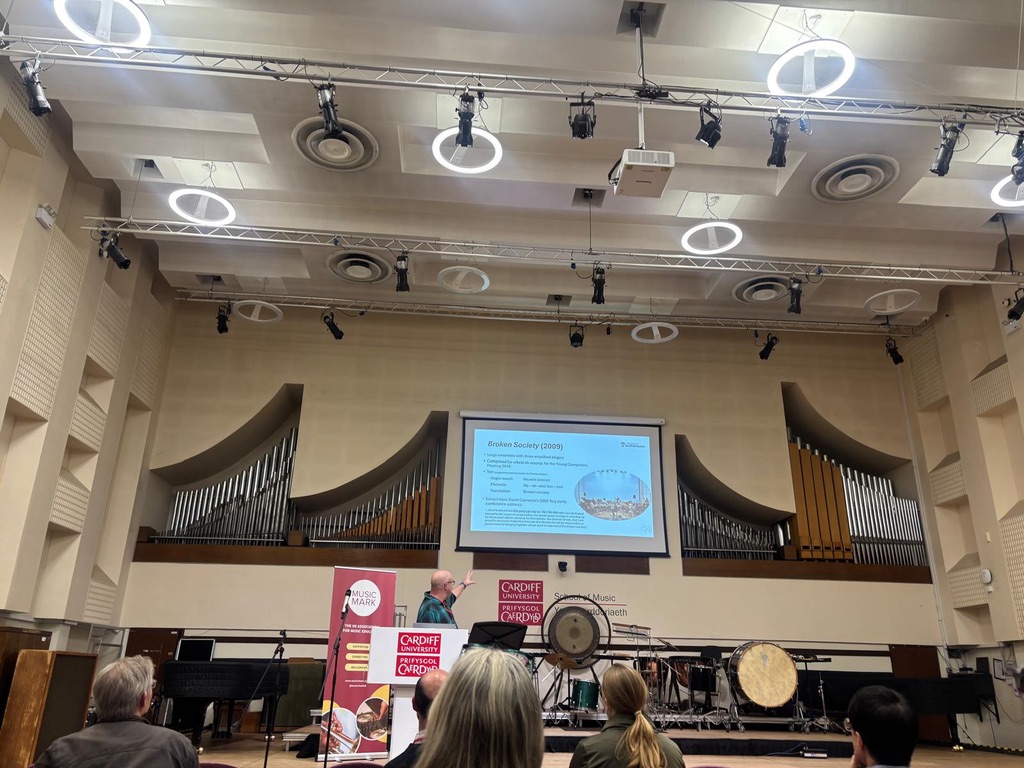
Keynote

Was happy to give the keynote talk at the Music Mark HE Conference at Cardiff University earlier in the month. Here is the abstract:

Making (It) Work: Reflections on Collaboration and Community

Over my post-PhD career working in academia, collaboration has become intrinsic to my practice as a composer, through projects that engage with artforms including poetry, puppetry, dance and film, as well as interdisciplinary work with researchers from virology, generative AI, sociology, games design and hearing science. This work has led me to be increasingly curious about how I can use my practice-research expertise to engage audiences with musical concepts, extra-musical phenomena and political ideas. Furthermore, working with a range of communities, musicians and artistic-practitioners has inspired me to reflect on my positionality and try to ensure I work in a non-extractivist and equitable way with both (freelance) collaborators and (research) project participants.

In this talk I will reflect on some of my experiences as a composer making work within, and outside, the academy. I will focus in particular on the development of my ongoing project ‘Pythagoras’ Toolkit’, which began in 2019 with a Canadian Arts Council funded commission from Montreal ensemble Paramirabo for a 45-minute puppetry-music piece for children and families (Warr & Oliver, 2023), and has led to a range of education interventions including our recently released digital resource Pythagoras’ Workshops Toolkit (Oliver, Warr & Lam, 2025). Drawing on approaches to equitable (and ethical) collaboration, I will consider how researchers in music studies might work towards meaningful creative public engagement and impact.

Feedback Loops Impro Project

Looking forward to playing with awesome people at the University of Southampton AI Festival on Sunday 22 March. Bringing together new impro group, FEEDBACK LOOPS, featuring Tamar Osborn (sax), Gre (voice/composer), Pablo Galaz (electronics/composer) and James Ashdown (drums). Programme includes my new 1-page score – INTELLIGENCE RONDO:

Pythagoras’ Workshops Toolkit

As part of my work at the University of Southampton I’ve created, with Rachel Warr and Chi Ying Lam, a toolkit based on Pythagoras’ Toolkit. I’m really proud of this resource, which is aimed at educators working with children aged roughly 7 to 11. This nifty video introduces it:

You can download the resource for free at this LINK
The project website is: https://www.southampton.ac.uk/research/projects/pythagoras-toolkit

Evening out at the Ivors

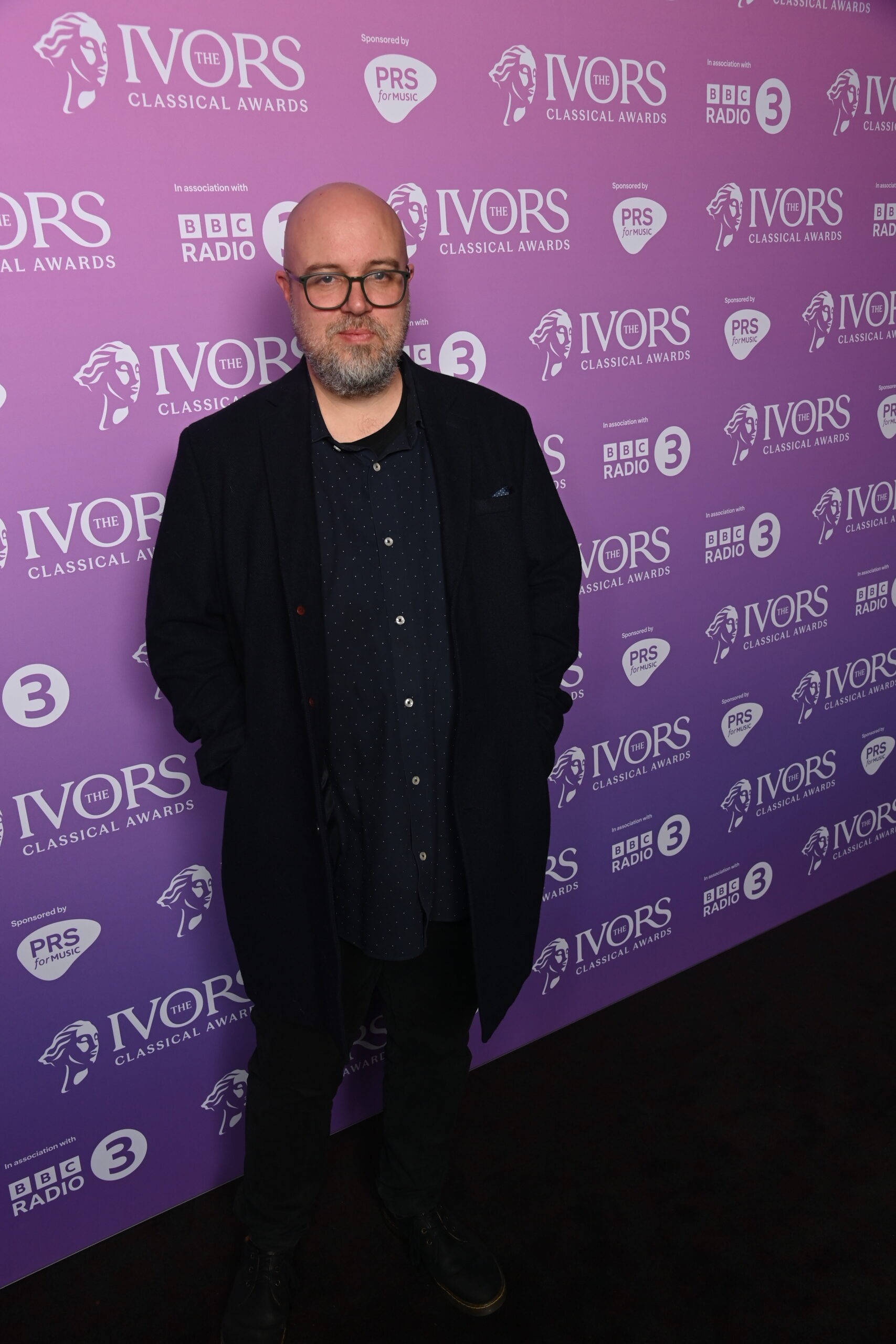
Had a nice time at the Ivors Classical Awards last week. Didn’t win with VENT, co-created with Rachel Warr for/with MUSARC, but had a good time and got some posh snaps. Great to catch up with various composer mates too.

And with Rachel Warr: